Petra Klein · 27 September 2026
European Student Networks Integrate Microgravity Data with Orbital Debris Sensors
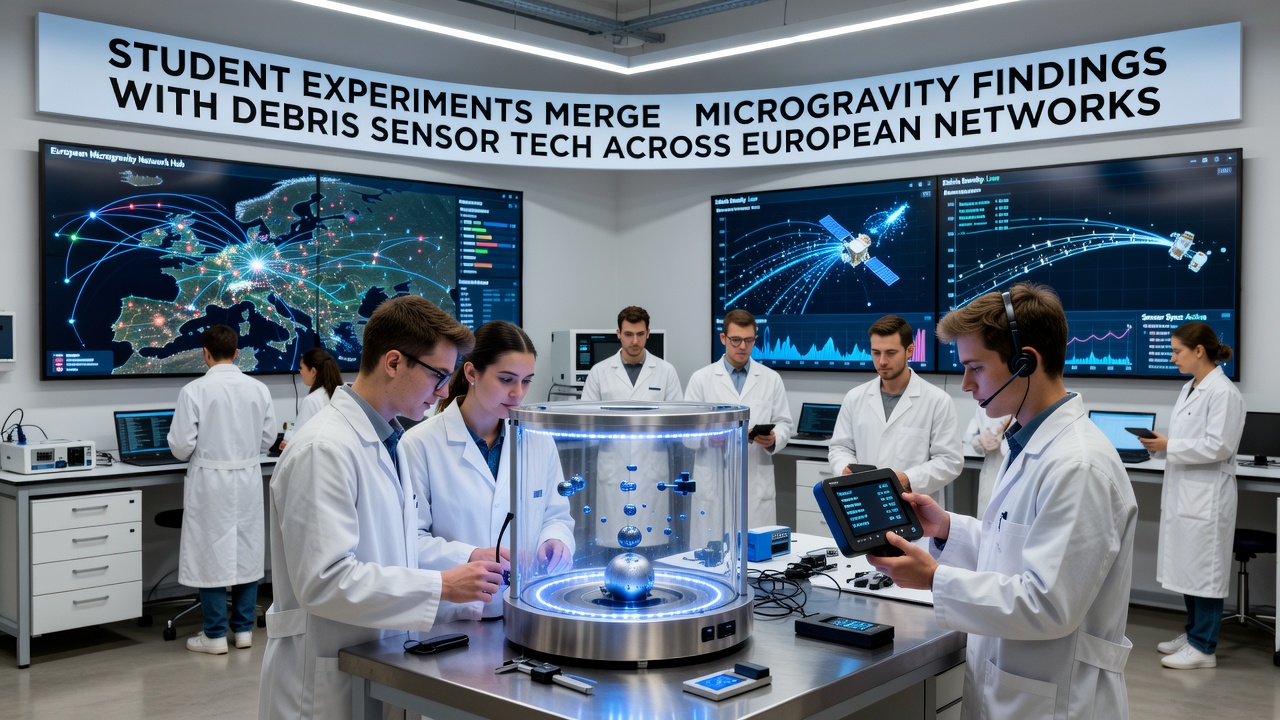
Student researchers at universities throughout Europe have begun combining results from microgravity experiments with data collected by orbital debris sensors, and networks spanning multiple countries now coordinate these efforts on a regular basis. Projects launched in 2025 expanded during the summer of 2026, with new collaborations reported in September 2026 when several institutions released joint datasets that link fluid behavior under microgravity conditions to sensor calibration techniques used in debris tracking.
Cross-Border Coordination Expands Project Scope
Teams at institutions in Germany, France, and the Netherlands share microgravity findings from parabolic flight campaigns while sensor developers in Italy and Spain contribute hardware specifications for debris detection systems. Data exchange protocols established by the European Space Agency allow participating groups to align experiment parameters, and this alignment produces datasets that cover both short-duration microgravity intervals and continuous sensor readings from ground-based test facilities.
One study coordinated through the network examined how liquid droplet dynamics observed during microgravity flights affect the interpretation of radar returns from small debris particles. Researchers adjusted sensor algorithms after reviewing flight logs from 2025 campaigns, and the revised models now account for signal scattering patterns that resemble droplet coalescence events recorded in weightless conditions.
Technical Integration of Findings and Hardware
Debris sensor prototypes deployed on stratospheric balloons incorporate calibration curves derived from microgravity fluid experiments. These curves improve particle size estimation when sensors encounter metallic fragments traveling at orbital velocities. Students at participating universities constructed test chambers that replicate microgravity fluid behavior on the ground, and they then compared chamber results with balloon flight data collected during the same observation windows.
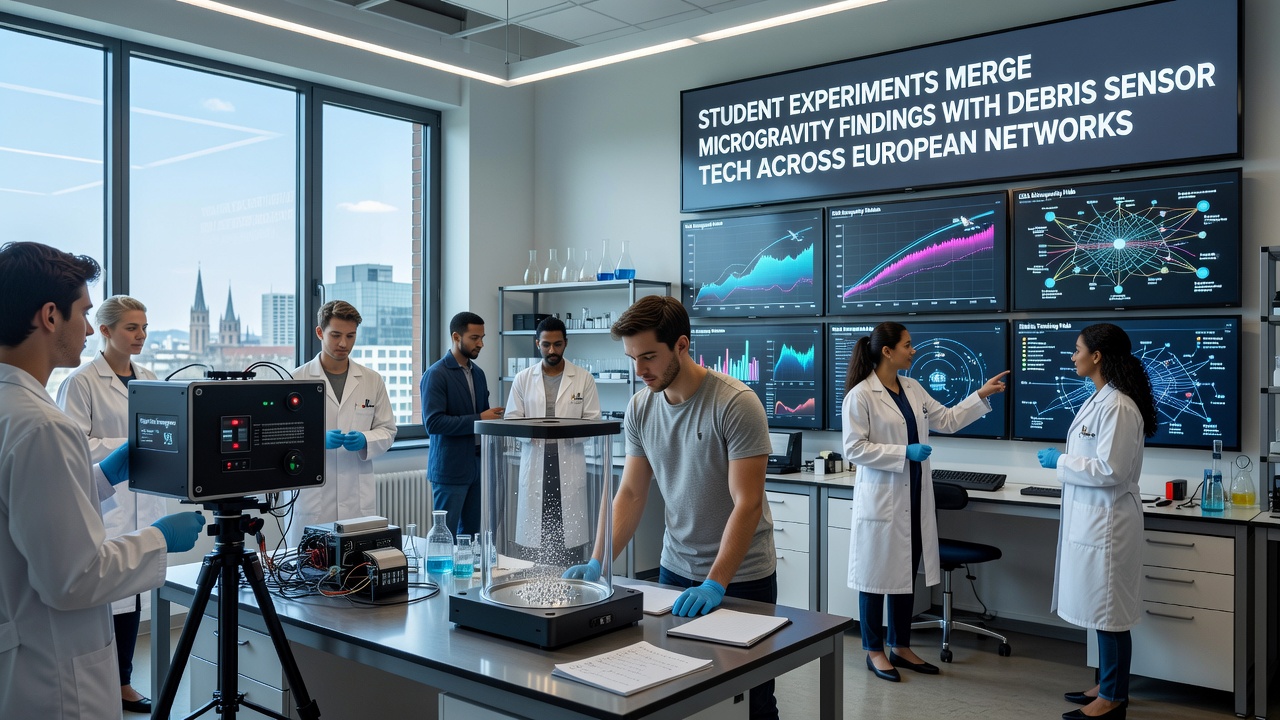
September 2026 updates from the network included firmware releases that merged these two data streams into a single processing pipeline. The pipeline runs on embedded systems carried by high-altitude platforms, and operators report reduced false positive rates when debris signatures pass through the updated filters. Students documented the firmware changes in open technical reports distributed across the partner institutions.
Role of Academic Institutions and Shared Resources
University laboratories supply both the microgravity experiment hardware and the sensor test rigs. Shared repositories hosted by research consortia store raw flight data alongside sensor logs, and access remains open to verified student groups. This repository structure reduces duplication of effort because teams in one country can reference calibration sequences already validated elsewhere.
Figures released by the European Space Agency in mid-2026 show that coordinated student projects accounted for 14 percent of new debris sensor validation tests conducted on European ground facilities during the previous twelve months. The same report notes that microgravity experiment outputs contributed to 9 percent of algorithm refinements submitted to the agency’s tracking database.
Future Data Streams and Planned Expansions
Additional flights scheduled for late 2026 will carry combined payloads that record microgravity fluid data and debris sensor readings simultaneously. Network members plan to extend the same integration methods to cubesat missions once launch opportunities open in 2027. Preliminary designs already incorporate the calibration curves developed from earlier student campaigns.
Conclusion
European student networks continue to merge microgravity experiment outputs with debris sensor technology through shared protocols and joint data releases. The September 2026 dataset updates demonstrate how these combined approaches refine sensor performance while expanding the range of conditions under which student researchers can test their systems. Ongoing coordination across institutions maintains the technical links required for further progress in both research areas.