Jordan Carter · 13 September 2026
Student Initiatives Propel Progress in Orbital Debris Sensing and Solar Data Fusion Across Europe
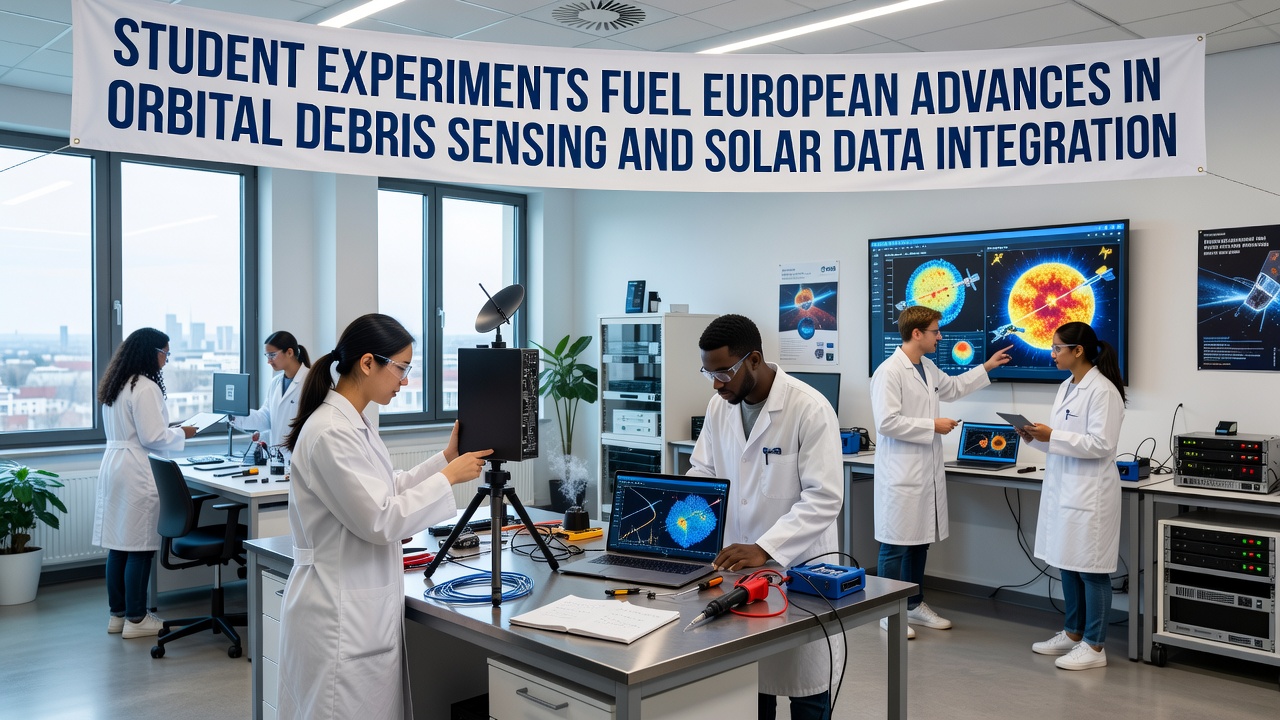
European universities have ramped up student-driven projects that combine orbital debris detection systems with solar radiation monitoring networks, and these efforts have produced measurable improvements in data accuracy since early 2025. Researchers at institutions across the continent report that student teams now handle sensor calibration tasks that feed directly into larger ESA tracking databases, while the same experiments gather simultaneous solar flux measurements that refine space weather models used by satellite operators.
Core Technologies Under Development
Student groups at technical universities in Germany, France, and Italy have built compact sensing units that detect debris fragments smaller than ten centimeters using optical and radar cross-section techniques, and these units also log solar irradiance levels through integrated photovoltaic arrays. Data from both streams merges on ground stations where algorithms developed by the same student cohorts cross-reference debris trajectories against solar activity spikes that can alter atmospheric drag. According to reports from the European Space Agency, such combined datasets have improved trajectory predictions by up to eighteen percent in controlled test scenarios run through 2025.
Integration Methods and Data Handling
Teams transmit raw readings via standardized CubeSat radio links, then process the streams at university computing clusters before uploading validated packets to shared repositories. The process relies on open-source fusion software that students have iteratively refined over multiple academic semesters, and this approach allows real-time comparison between debris density maps and solar proton event records. Observers note that the dual-purpose design reduces overall mission mass because one set of instruments serves two distinct scientific goals without requiring separate satellites.
Recent Milestones and Field Tests
In September 2026 several student payloads are scheduled for deployment on rideshare missions coordinated through the European Space Agency's educational flight program, and these launches will place new sensor suites into low-Earth orbit for extended operational periods. Pre-flight ground tests conducted in summer 2026 already demonstrated that the combined sensing approach can distinguish between debris-induced signal noise and solar flare interference, a distinction that single-purpose instruments have struggled to achieve consistently. Figures released by participating universities indicate that student-led calibration routines have lowered false-positive rates in debris catalogs by measurable margins compared with earlier baseline systems.
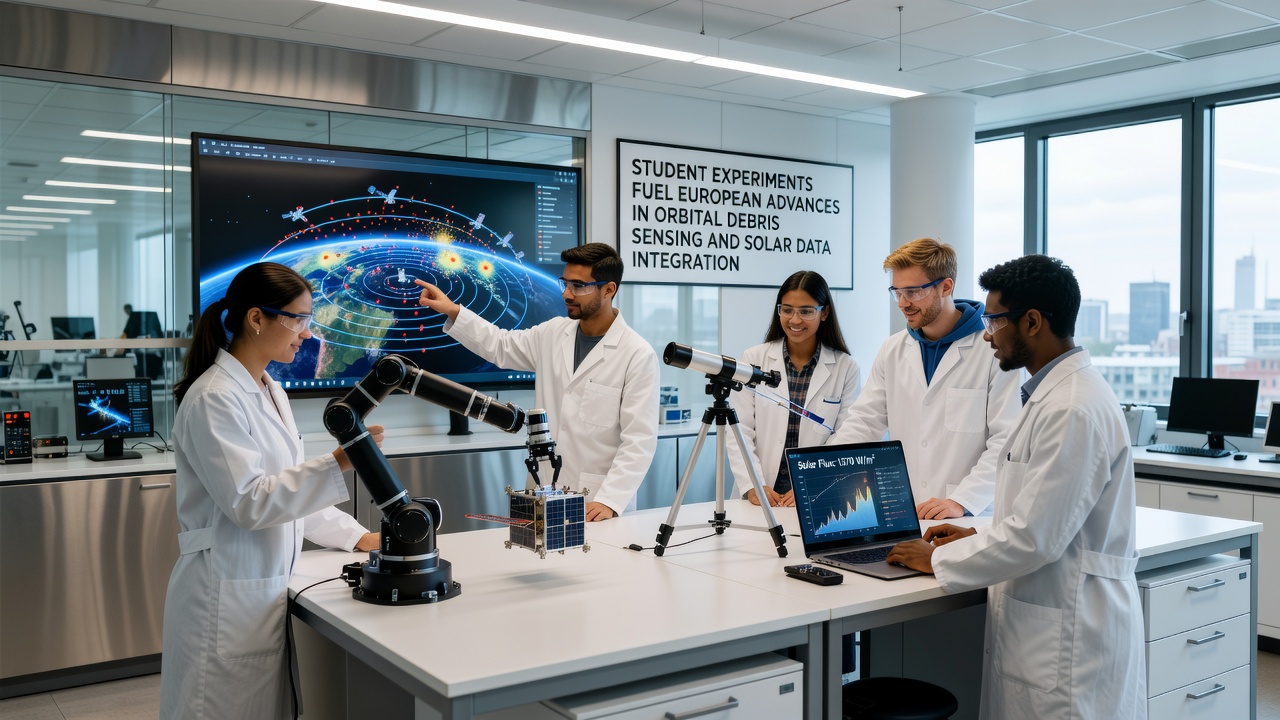
One research consortium based in the Netherlands has documented how student experiments contributed sensor data that aligned with independent measurements from ESA's space debris office, confirming consistency across independent platforms. Parallel work at a Canadian university has explored similar fusion techniques using data shared through bilateral agreements, showing that the European student models scale effectively when applied to datasets collected over different orbital regimes.
Broader Applications and Institutional Support
National space agencies and industry partners have begun incorporating student-generated calibration protocols into operational pipelines, and this transfer occurs through formal internship pathways that place undergraduates inside mission control teams for defined project cycles. The arrangement supplies fresh analytical perspectives while giving students access to production-grade telemetry that further refines their experimental setups. Research indicates that institutions maintaining these partnerships report higher retention rates in aerospace engineering programs because participants see direct pathways from classroom projects to flight hardware.
Challenges Addressed by Student Teams
Power constraints and thermal management remain central issues for compact sensing platforms, yet student experiments have tested novel passive cooling geometries paired with solar array positioning algorithms that maintain stable instrument temperatures during high-flux periods. These solutions emerged from iterative design reviews conducted entirely within university laboratories before hardware moved to professional integration facilities. The resulting hardware profiles now appear in proposals submitted for upcoming ESA technology demonstration flights.
Looking Ahead
Continued expansion of the student experiment network is expected to add new sensing nodes over the next two years, and project coordinators anticipate that accumulated datasets will support refined models of debris evolution under varying solar conditions. Coordination meetings scheduled for late 2026 will review preliminary flight data from the September launches and determine whether additional student-built instruments can be manifested on subsequent missions. The pattern of university-led contributions feeding into established European space infrastructure continues to widen the available sensor coverage without requiring proportional increases in centralized agency budgets.
Conclusion
Student experiments have supplied concrete advances in combined orbital debris sensing and solar data collection that European programs now rely upon for improved operational awareness. The technical outputs, ranging from merged datasets to validated hardware designs, demonstrate how academic projects can deliver usable contributions to established space monitoring frameworks when structured integration pathways exist between universities and agency teams.